«Medium shot: a hangar of a test center, three viewing portholes of different shapes — wide, square and tall vertical — each showing the same gas giant composed in its own way. Cold hangar light, warm glow of the planet.»
Describe your own scene — and get a series in the chosen style
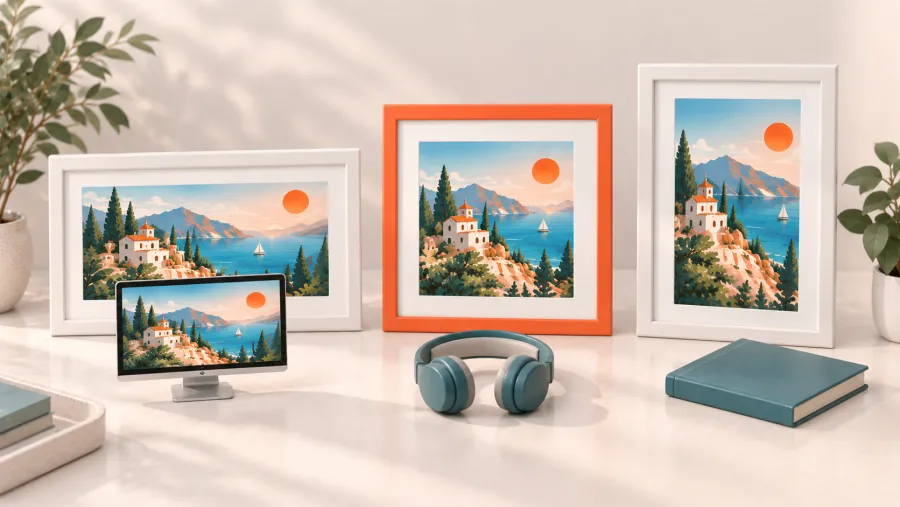
Open the “Concept Art” styleThree image formats: horizontal, square, vertical — where each one works
In brief
Horizontal is for screens: video, articles, presentations, banners. · Square is for tiles and feeds: music, podcasts, Telegram, social media. Vertical is for books and posters. · One order — one format. Need several — place separate orders in the same style.
Horizontal (16:9)
The screen format — and the format of everything that lives on a screen. Video thumbnails for YouTube and other video platforms, article header images, title slides of presentations, banners and headers. If your content is watched in a player or read in a feed of articles, your format is horizontal.
Square (1:1)
The format of tiles and feeds. Music on streaming platforms, podcast artwork, Telegram, social media feeds. A square works equally well in a podcast directory, in a music player and in a grid of posts — anywhere images stand in rows.
Vertical (2:3)
The format of the print tradition. Books — from self-published titles to textbooks — and posters. The proportions of a book jacket read as “a publication” even on screen: a vertical frame tells you at once that you are looking at a volume, not a post.
One rule
One order — one format: all the images in the series come in the chosen proportions. That is how a series stays a series — a row of thirty images in the same frame looks put together and professional.
If a project lives in several places — say, a podcast and its video version — you place separate orders. And you can take the same style for both: the visual language is kept, and the project stays recognizable anywhere.
How to decide if you are unsure
Start from your main platform — the one where your audience meets you most often. A video channel — horizontal. A podcast, music, Telegram — square. A book series — vertical. And if the task is mixed, start with the format of your main platform: the next series can always be made in another.